
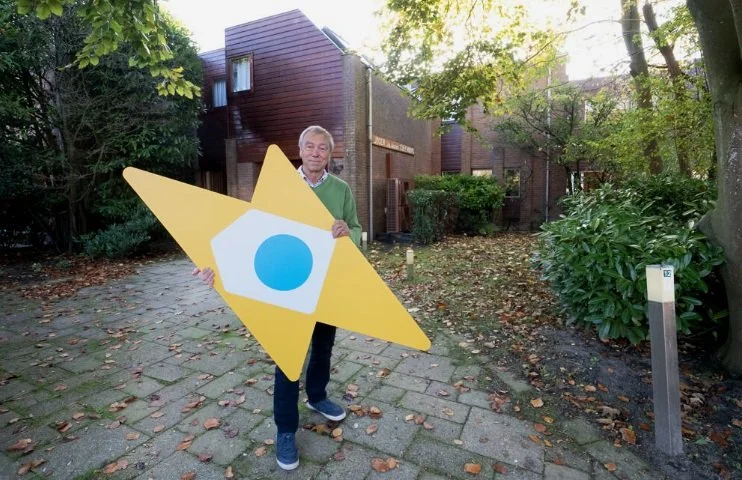
Gerard (71) and Dianne (64) Jägers have been living in their 1970s home in Spaarndam for nearly 38 years. This “oldest modern house,” built in 1976, was popularly known as “the bunker,” a reference to the lack of windows on the front. The house has been natural gas-free since this past spring. Gerard and Dianne are happy to share more about this.
Green Pioneers
Gerard and Dianne began making their home more sustainable ten years ago. During his career at Tata Steel, Gerard was responsible for energy conservation, which gave him a deep understanding of developments in green energy. In 2013, the couple became the first residents on their street to install solar panels—even before subsidies or VAT refunds were available for such installations. Their motivation behind these investments? Sustainability. Financial returns down the road did not play a major role in this decision. “I don’t worry about payback periods,” Gerard explains.
The Jägers were pleased with this first step toward making their home more sustainable. Other measures soon followed: floor insulation, cavity wall insulation, and, in 2018, a hybrid heat pump, a solar water heater, underfloor heating, and a mechanical ventilation system with heat recovery (WTW). This ventilation system reuses the warm or cool air already inside the house, ensuring that no energy is lost. The Jägers’ home, which has a typical 1970s brown exterior, began to take on a greener look.
Despite the energy savings and the reduction in gas consumption, something still bothered him. “When you see that you’re saving a lot of gas with underfloor heating and a hybrid heat pump, it’s just a small step from there,” Gerard explains. And so, in May of this year, a full heat pump was installed, with Klimaatmissie playing a supporting role. Now the house in Spaarndam is completely natural gas-free. The Jägers had the heat pump units on the outside of the house painted to match the color of their home—brown. It’s an inventive solution that ensures, despite the ultra-modern units, none of the 1970s charm is lost.
The result
The sustainability measures have had a significant impact on their gas consumption, as Gerard demonstrates with a detailed bar chart. “This shows Gerard’s interest in sustainability,” his wife says with a laugh. But in addition to the environmental benefits, the couple has also experienced numerous other advantages. They no longer have to deal with musty odors in the house caused by moisture, and it’s always comfortably warm in the winter and cool in the summer. In addition, making their home more sustainable has increased its value. But that’s not all that important to them: “We don’t plan on moving,” says Dianne.
Gerard’s interest in renewable energy, incidentally, extends beyond his own home. Through the energy cooperative Zon op Haarlemmermeer, he is committed to generating solar energy collectively. Residents of Haarlemmermeer who are unable to install their own solar panels, or who would like to generate more solar energy, can collectively become owners of solar roofs on buildings such as community centers. This approach encourages the production of local solar energy. The first project—the roof of the Boskern community center in Hoofddorp—recently got underway.
Recommended Items
Gerard and Dianne have implemented many different sustainability measures. Would they recommend this to others? Their answer to that question is a resounding yes. “But do it in steps. Insulation, ventilation, and then gradually move on to the other steps,” Gerard advises. After all, these are costly investments that not everyone can make right away. So jumping straight to a full heat pump isn’t necessarily required. Even with a hybrid heat pump, you can already make a big difference, Gerard believes. “I’m glad we took an intermediate step, ” he concludes .
Their first winter is just around the corner, so it remains to be seen what their energy consumption will look like in the coming months. Are there any other sustainability projects on the Jägers’ to-do list? Perhaps a third battery—they currently have two. In any case, they have the space for it. First, let’s see how this coming winter goes. In any case, they’re nice and warm in their natural gas-free home in Spaarndam.
Would you like to learn more about Zonophaarlemmermeer, or would you like to join the first project? If so, visit the website.