Insulated Glass
Simple, high efficiency, and greater living comfort.
Do you have problems with cold and drafts coming through your windows? Replace single- and double-pane glass with HR++ or triple-pane glass. With well-insulated glass, you keep the heat inside and are less bothered by outside noise. Plus, it’s good for your energy bill and the climate. But when should you replace the glass, and with what? How much does it cost, and what are the benefits?
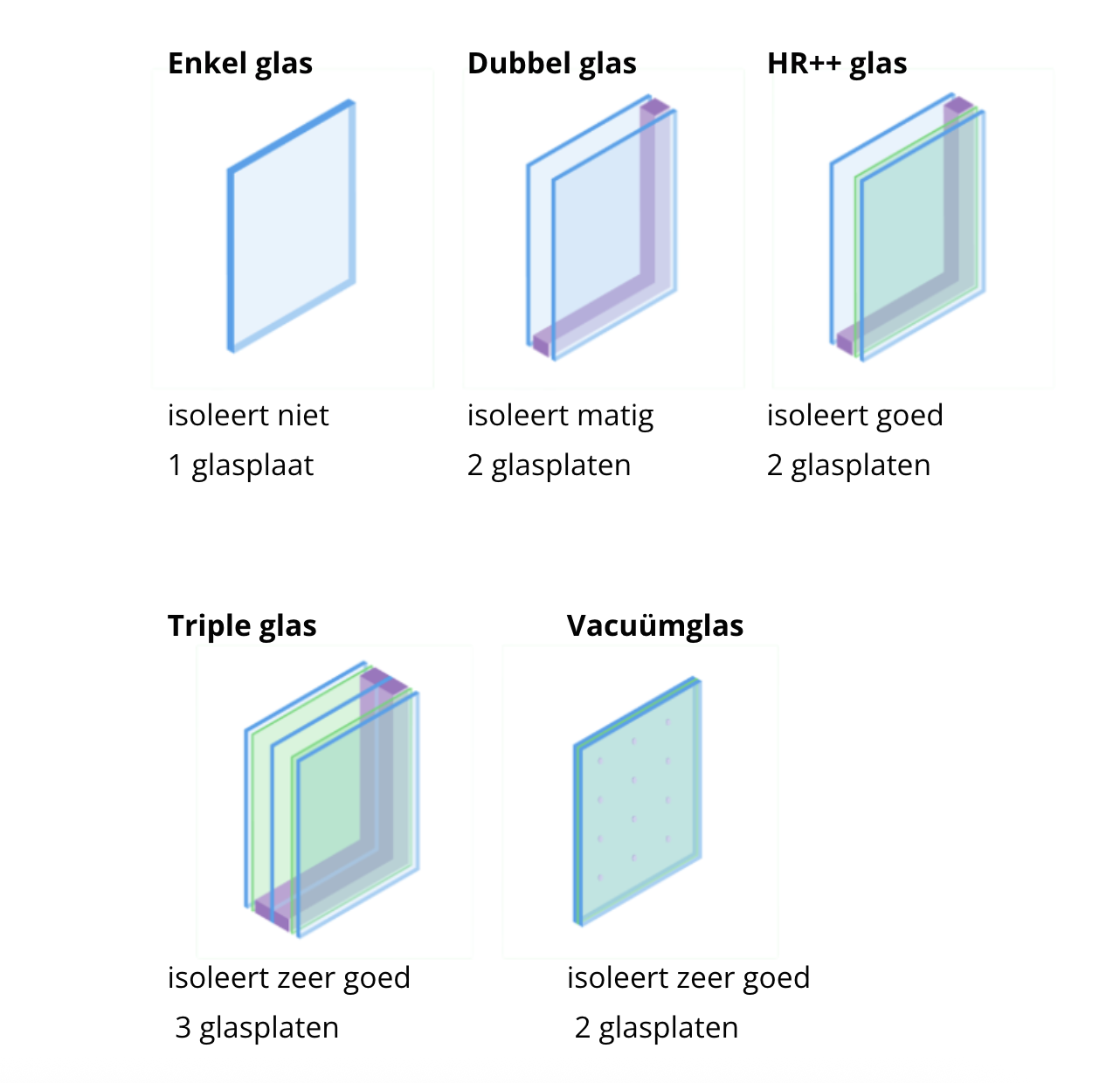
HR++ and triple-pane glass… what do these terms actually mean? The names say it all: single-pane glass consists of one layer of glass and provides poor insulation, while double-pane glass consists of two layers of glass and provides moderate insulation. HR++ is double-pane glass with a coating and insulating gas between the panes, which makes it insulate much better than double-pane glass. Triple-pane glass consists of three layers of glass with a coating and insulating gas, making it insulate even better than HR++ glass.
Insulated glass improves comfort in your home by reducing drafts, keeping the house warmer, and blocking out noise. It also increases the value of your home and makes it easier to switch to low-temperature (floor) heating or electric heating.
Temperature difference on the inside of the glass
If you have better insulating glass in your home, less cold air will come through the windows. This makes the indoor climate more comfortable and slows down the rate at which the room cools down. See the image below to see the difference in temperature for each type of glass.

Grant Available!
A grant is available for this measure. If you implement this measure in your home, you can apply for the ISDE grant and the insulation grant.
How much do HR++ and triple-pane windows cost, and what are the benefits?
HR++ glass in existing window frames
How much can you save by replacing all the windows (21.5 m²) in an average corner house with HR++ glass? Suppose you had single-pane glass everywhere; that would save you about €390 per year in energy costs. If you had double-pane glass everywhere, you’d save €160 per year.
The table below shows the costs and savings associated with installing HR++ glass (in existing window frames) throughout the entire house, for a townhouse, a corner house, a semi-detached house, and a single-family home. These figures are compared to single-pane and double-pane glass. Subsidies are not included here.
Installing HR++ glass (without window frames)
| Type of residence | One-time fees* | Annual energy cost savings (single/double)* |
|---|---|---|
| Townhouse | € 3.100 | €310 / €130 |
| Corner house | € 3.100 | €390 / €160 |
| semi-detached house | € 4.400 | €450 / €180 |
| Detached house | € 4.700 | €450 / €190 |
(*) = Average amounts. These are subject to change.
Costs and Savings with HR++ Glass and Triple-Pane Glass with Window Frames
Are you planning to replace your window frames as well? Then consider triple-pane glass. In a corner house, new window frames with HR++ glass cost €8,100. If you opt for insulated window frames with triple-pane glass, it will cost you about 20 percent more. For a corner house, that amounts to about €1,500 extra. This will save you an additional €90 per year—and for many years to come, since window frames and glass last a long time.
What are the costs and savings per type of home for insulated window frames with triple-pane glass? Please also compare these to single-pane and double-pane glass. These costs do not include subsidies.
Installing HR+++ glass (with window frames)
| Type of residence | One-time fees* | Annual energy cost savings (single/double)* |
|---|---|---|
| Townhouse | € 8.400 | €480 / €260 |
| Corner house | € 10.800 | €600 / €320 |
| semi-detached house | € 12.000 | €670 / €360 |
| Detached house | € 13.000 | €670 / €360 |
(*) = Average amounts. These are subject to change.
Vacuum Glass
Vacuum glass is a special type of double-pane glass with the same insulation value as triple-pane glass, but much thinner. The glass is only 8 mm thick, much thinner than other types of insulating glass.
Vacuum glass consists of two glass panes with a high-reflectivity (HR) coating, a vacuum, and nearly invisible spacers between the panes.
The cost of vacuum glass is approximately €550 per square meter, including installation and VAT. It is a good choice for historic buildings because vacuum glass insulates much better than historic building glass. The glass is also available in a version that looks like antique glass.
Vacuum glass types are eligible for the ISDE insulation subsidy
How can we help you?
-
Eventually, yes, but if the exterior walls, floors, or roof haven’t been insulated yet,
recommends doing that first. Those measures yield greater savings and pay for themselves more quickly
. -
Generally speaking, yes, though sometimes the window frame needs to be adjusted slightly. Especially with
hinged windows (casement windows), it’s important to check whether the frame and hinges can support the
double-pane glass. The glass supplier always takes this into account. -
With double-pane windows, you'll see an aluminum strip between the panes marked with the code HR, HR+, or HR++. If this code is missing, you probably just have double-pane windows.
-
For the sake of the climate, your comfort at home, and your energy bill, it’s a good idea to replace all single-pane glass
in your home (even in unheated rooms!) with HR++ or, if possible, triple-pane glass.