
The colder months are approaching, which means it’s time to turn the heat back on. A well-maintained central heating system helps keep your home comfortable and prevents unnecessary energy consumption. With these 6 tips, your heating system will be well prepared for the heating season.
1. Clean your radiators
Dust on and between your radiators can reduce heat output. Therefore, clean them regularly. Turn off the heat and let the radiator cool down first. Remove dust with a vacuum cleaner or feather duster, and clean the outside with a slightly damp cloth.
2. Check the water pressure in your central heating system
If the water pressure is too low, your central heating system may not work as well as it should. Therefore, check the pressure in the boiler regularly. For many systems, the correct pressure when the boiler is cold is between 1.5 and 2 bar. Check your boiler’s manual for the exact value. Is the pressure too low? If so, you can usually top off the system with water yourself. Turn off the boiler and let the system cool down. Then connect the fill hose to the water faucet and the boiler’s fill valve. Slowly add water until the correct pressure is reached, then close the valves.
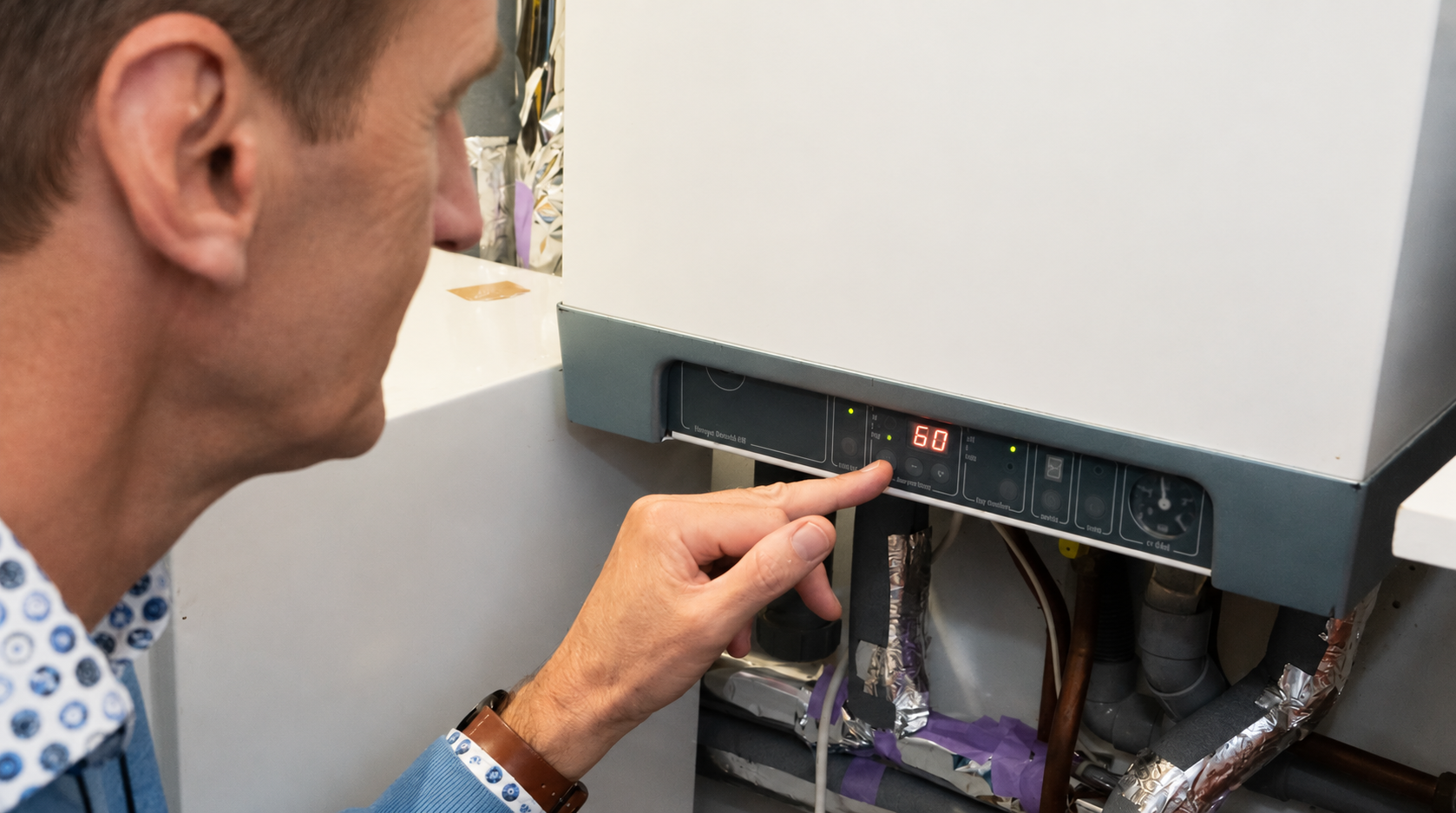
3. Set your boiler to 60 °C
On many boilers, the heating water temperature is set higher than necessary. By lowering this temperature to 60 °C, the boiler can operate more efficiently. Your home will still be heated, but the boiler won’t have to produce as much hot water, which saves energy. You can usually adjust the temperature yourself via the boiler’s display or settings. Check your boiler’s manual or ask a technician to do this for you. On the “Zet ‘m op zestig” website, you can enter your boiler’s make and model and watch an instructional video on how to lower the temperature. Note: the temperature of hot tap water is slightly different. Adjust only the
temperature of the heating water.
4. Apply radiator foil
Radiator foil helps prevent heat from escaping through an exterior wall. Place the foil behind the radiator so that the heat is reflected back into the room. You can apply radiator foil directly to the wall behind the radiator or attach it to the back of the radiator. Foil attached to the radiator is often less visible and easier to install. Tip: Measure the radiator first and cut the foil to size.
5. Adjust your heating system on the water side
Is one room just not getting warm, while another room is too hot? Then the hot water from your boiler may not be distributed properly among the radiators. With water-side balancing, the radiators are adjusted so that the hot water is distributed more evenly throughout your home. This ensures that rooms are heated more evenly and allows your boiler to operate more efficiently. You can have an installer do this, but you can also perform water-side balancing yourself. Curious how? Check out the practical guide here.
6. Service your boiler regularly
Have your boilerinspected annually or every two years by a service technician.
You can also sign up for a maintenance contract for this purpose. A well-maintained boiler lasts longer and has fewer breakdowns.