
Arjan Hijstek (55) lives in Badhoevedorp with his wife and son. He has recently made significant improvements to his home to make it more sustainable. We spoke with him about the measures he had implemented and how the process went.
Arjan: “There are three of us at home, and we use a lot of electricity. My son is attending college from home, and I work in IT. A sustainable home is cheaper and more self-sufficient in the long run.”
How It All Began
The house was built in 1955. He moved in with his family in 2006 and carried out extensive renovations the following year. Good insulation was already installed in the new additions at that time. In September 2020, he decided to have cavity wall insulation installed. Because he took advantage of a municipal discount program and was able to get a VAT refund, he ultimately opted for solar panels as well.
“The cavity wall insulation works like a charm. Since then, I haven’t turned on the heat in some rooms at all.” The installation of the solar panels took a little longer, but they were installed in May and June. He received advice on this from Energieloket Haarlemmermeer.
Everything is high-end and custom-made
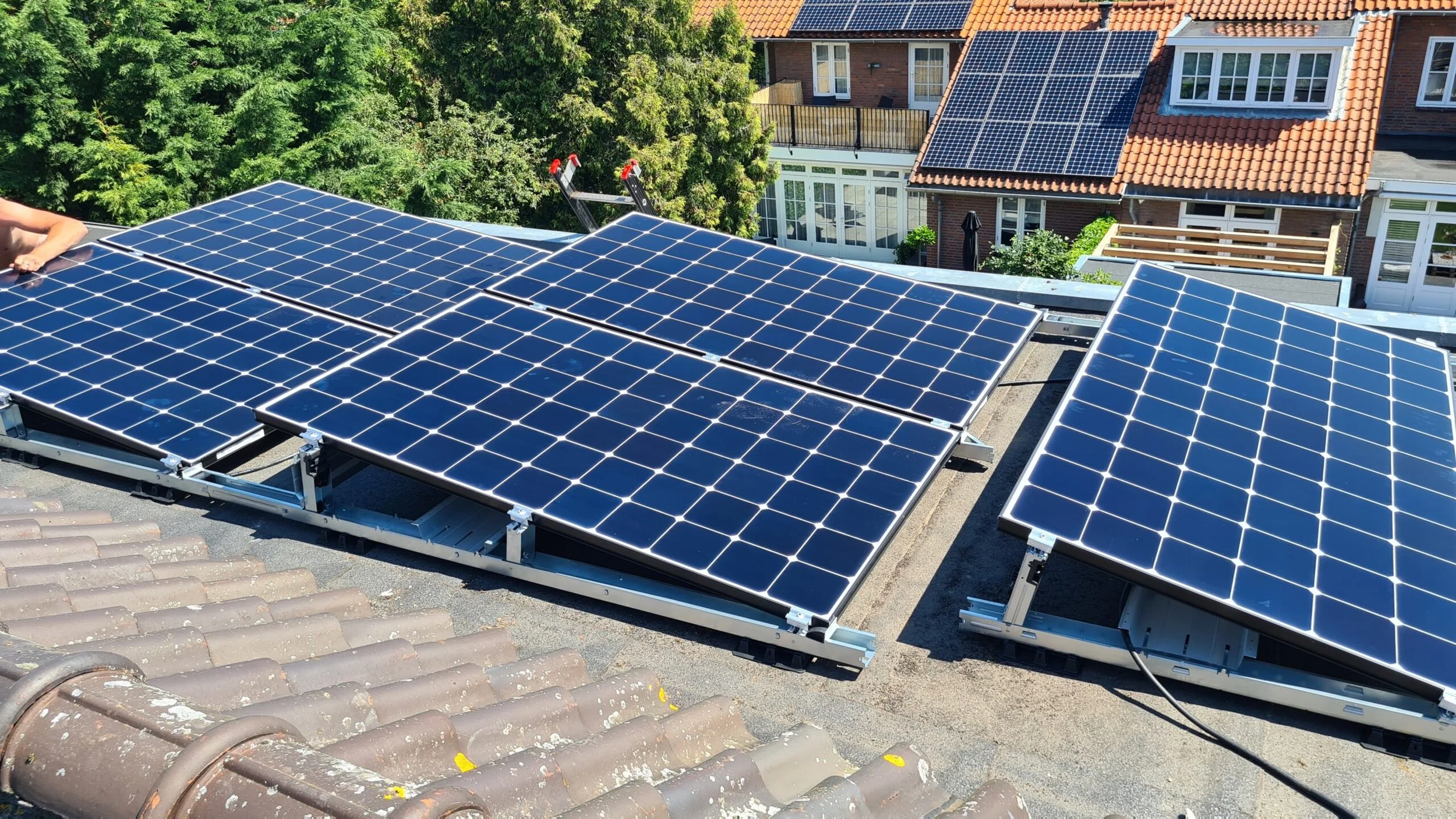
Arjan did a tremendous amount of research by visiting forums and gathering information online. He decided he wanted everything to be high-end and custom-made for the house. “I want it to look nice, and I don’t want things like pipes and tubes to be visible. That’s why I also chose black panels for the front of the house.” Still, it’s not just about the appearance. Arjan: “High-end is more expensive, but since you get the VAT refunded, the difference does become smaller. Ultimately, these panels do have a higher efficiency and come with a longer warranty.”
Solar Power
It was a sunny summer day when we spoke with him. He explained that on days like that, he generates more electricity than he needs and feeds the excess back into the grid. This is called net metering, and as a result, he ends up paying less for his energy bills. There are plans to change this so-called net metering program in 2023, and it’s possible that the amount you’re allowed to offset each year will gradually decrease. That’s why he wants to purchase a Powerwall by then. A Powerwall stores the extra electricity in your home. “If I have excess capacity, I want to be able to store my electricity so I can use it myself in the evening or when the sun isn’t shining.”
Full Circle
Arjan’s house is currently still connected to the natural gas grid. That’s why he also looked into a hybrid heat pump, but he found that this option had a long payback period. Also, a hybrid heat pump still works in conjunction with the furnace, which is only used seven months a year.
He has therefore decided to install high-end air conditioners in his home that both cool in the summer and heat in the winter. The air conditioners use an air-to-air heat pump and extract heat from the air. These will work in conjunction with the solar panels that generate electricity and the future Powerwall that stores electricity, creating a fully electric and sustainable system. It’s yet another investment, but he’s absolutely thrilled with it. “It took a lot of time and effort to figure everything out, but it was definitely worth it.”
Have a plan and go for it
Arjan says it’s important to have a plan and do your research. Ask yourself what you want and why you want it. In his case, it was a sustainable, reliable, high-end system that provides his entire family with constant comfort. This can be different for everyone. Many people benefit greatly from a small improvement, such as cavity wall insulation. The Haarlemmermeer Energy Help Desk helps residents make choices that align with the needs of each unique resident.