
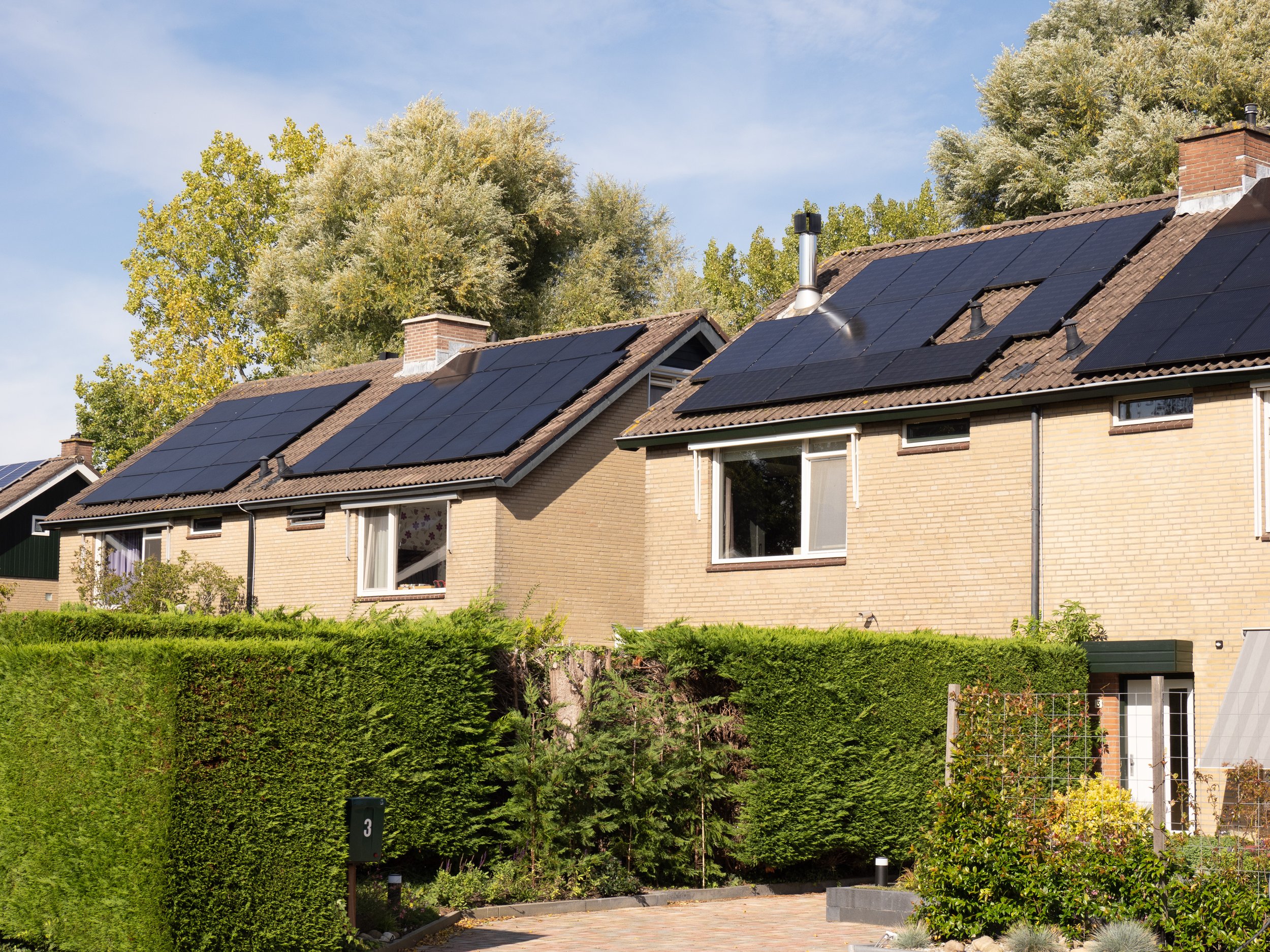
Despite the enormous success of solar and wind energy, we continue to emit more and more CO2. Why is that, and what can we do about it?
It’s a story we all hear in school: At first, humans mainly used wood as an energy source; then we switched to coal and fossil fuels. Now we’re in the midst of a transition to green, renewable energy. But is that really true?
Several reports were recently released in connection with the Climate Summit in Brazil. Despite the enormous success of solar and wind energy, these studies show that we are still emitting far too much CO2. There are several reasons for this.
The use of fossil fuels continues to rise
Even though the global energy supply is becoming increasingly “greener,” there remains a huge demand for fossil fuels such as oil, coal, and natural gas. Even if all countries were to keep their climate commitments, by 2035 humanity would still be emitting twice as many greenhouse gases as needed to meet global climate agreements.
One reason for this is the growing global population. Countries such as China and India are undergoing tremendous development, which is accompanied by a significant demand for energy. But consider, too, technological advancements such as artificial intelligence (AI) or the mining of various digital currencies like Bitcoin. More and more data centers are springing up around the world, and they, too, consume a lot of electricity.
In addition, generating electricity from solar, wind, and hydro power naturally requires a lot of energy and raw materials. Materials such as plastic and aluminum (for solar panels), steel and composite materials (for wind turbines), and concrete (for dams) are, by their very nature, polluting to produce. And even though it’s entirely possible to recycle these materials, that certainly isn’t happening everywhere yet.
The Difference Between Wanting and Doing
But there’s also good news. There are, in fact, several levers that we as consumers can pull ourselves. Milieu Centraal’s “Monitor Duurzaam Leven” shows that there’s plenty to be gained by changing our behavior. Many people want to live more sustainably, but are afraid they’re the only ones.
That gives us hope, because there’s plenty you can do. For example, make a conscious effort to use AI at work, at school, or in your free time, and give your own brain a workout, too. See if you can switch to a sustainable energy provider that sells only energy produced in the Netherlands. Buy secondhand more often, especially when it comes to clothing and energy-intensive products like e-bikes and cars. And check whether your bank or pension fund invests in polluting industries or , on the contrary, in sustainability initiatives.
Conclusion
So we are indeed in the midst of an energy transition, but it’s not happening nearly as fast as we’d like. Replacing one thing with another is only part of the puzzle: we’re still not focusing enough on using less energy and fewer resources. New, energy-intensive technologies like AI don’t help in this regard. But we don’t have to stand by and watch helplessly. The way we eat, work, and live matters.
So let’s be mindful of our impact and start the new year on a positive and sustainable note!