
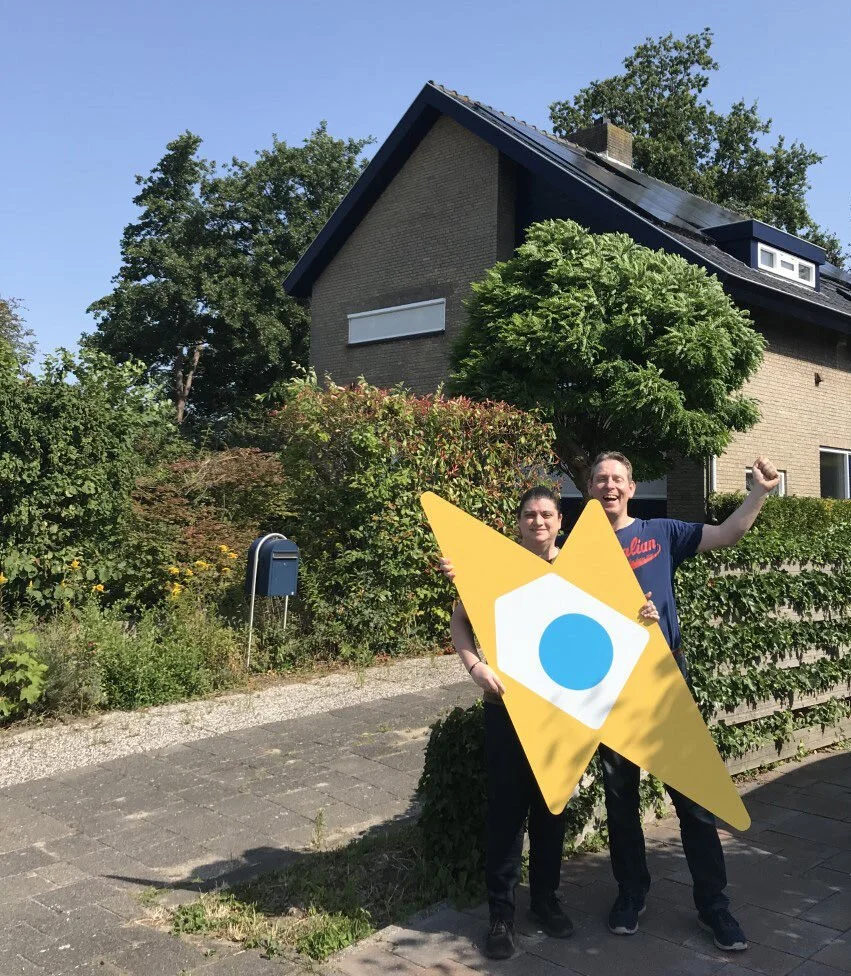
Gerco and his partner Jennifer have thoroughly upgraded their home—a house built in 1969 in Weteringbrug—to make it more energy-efficient. Due to the size of their home and the equipment used in their home-based business—which specializes in manufacturing high-quality composites—the couple had high energy consumption and, consequently, high energy costs. They decided this had to change. Gerco’s technical background made the process easier, but they also found a lot of information online.
They installed 49 solar panels on their roof, set up a comprehensive air-conditioning system (air-to-air heat pump), and installed highly efficient water heaters to heat their water. As a result, they’ll even be able to stop using gas soon. We spoke with them about making their home more sustainable—a process that has also greatly improved its comfort.
What steps have you taken to make your home more sustainable?
In 2020, we covered our southeast-facing roof with 30 solar panels and discovered that your roof doesn’t necessarily have to face south for this. We have a fairly large home and a home-based business, which means we use a lot of energy—as much as 13,000 kWh per year. Because the solar energy yield was so high, we also covered our northwest-facing side with 19 solar panels shortly thereafter. On an annual basis, these are slightly less profitable, but the output is enough to power cooking in the evening and other appliances. We even have energy to spare, since our annual energy production totals 15,000 kWh.
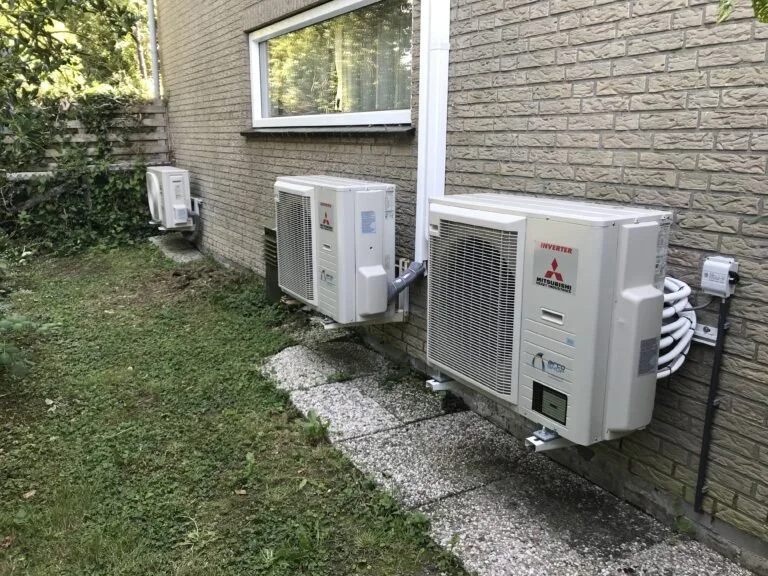
We also installed an air conditioning and heating system, specifically an air-to-air heat pump system. We’ve found that this system—from a reputable brand—works exceptionally well, is very user-friendly, and operates quietly. We started with two single-split units, one for the living room and one for a workspace in the basement. A year later, we had a multi-split unit installed: one outdoor unit and three indoor units for the upper floor, so that we can both heat and cool these spaces.
Because of the drafts and cold on the bedroom floor, we also insulated our attic. While working on this project, we discovered that the areas where the roof edge, cavity wall, and exterior wall met were all very open, allowing drafts and wind to blow through freely. Now that we’ve addressed this problem, our house feels so much more comfortable, and we’re using so much less energy! We also no longer hear the air conditioner—which was already fairly quiet—at all. I never would have thought that good insulation would provide so much extra comfort. This is a wonderful bonus, in addition to the lower energy bill, of course!
In the past, we used about 2,800 m³ of gas per year. To reduce our gas usage slightly, we often used electric space heaters. We expected electricity consumption to increase dramatically with the air conditioning and heating, but thanks to improved insulation and much more efficient heating, we actually have energy to spare.
When we replace appliances, I always pay attention to their energy consumption. We also often turn appliances off completely when we’re not using them. These days, I also have “smart plugs” (hombli) that measure energy consumption and can turn appliances on and off automatically. Very handy! To track our total energy consumption, I use Enelogic, which lets me see how much energy we generate and consume. I track this on a per-device basis using the smart plugs. We’ve also replaced the large fluorescent light fixtures in our workspace with LED lighting. We recouped the cost of this investment within a year.
Have you taken any other measures in your home?
We started by installinga Quooker in the kitchen. This meant we no longer had to wait for hot water, and having instant boiling water is also very convenient, of course. Since we also wanted instant hot water in the upstairs bathroom, I installed a built-in water heater there. I insulated it with PUR foam to keep standby heat loss to a minimum.
Actually, a heat pump water heater is more energy-efficient than a conventional water heater, but since we use very little hot water, we won’t recoup the investment costs very quickly. What’s more, we keep operating costs low by setting them to low power and using a timer so they heat up during the day using electricity from our solar panels. Thanks to these water heaters, we were able to switch off gas completely! We’ve already canceled our gas service, and the connection will be removed soon.
What made you decide to go green?
Themain reasonwas to save money. It didn’t seem like a good idea to keep subsidizing the energy companies when I could become my own “energy provider.” The solar panels will pay for themselves in a few years, and after that, I’ll have free energy.
Once we started saving energy, we became more aware. We realized just how much energy we were actually using and what happened when we adjusted our home and our habits. It became a challenge to keep saving more and more. An added bonus is the comfort. Thanks to the insulation, it’s so much more comfortable inside! In the winter, we can now heat specific rooms and use all the electricity coming from the solar panels at that moment, and in the summer, we keep the whole house nice and cool and still have plenty of electricity left over, which we share with the rest of the street. We also now have instant hot water everywhere thanks to the boiler in the kitchen and bathroom.
How did you know what steps to take?
I learned a tremendous amount from the Tweakers forum. It covers a wide range of topics, such as solar panels, water heaters, heat pumps, air conditioning systems, insulation, and so on. I also have a technical background myself.
What were the costs of these measures?
The total cost for the solar panels and the air conditioning system was approximately 25,000 euros. I spent about 3,000 euros on insulating the attic. Since we installed them ourselves, the two electric water heaters cost us about 500 euros. We spread these costs out over a period of three years. We expect that, given the higher energy prices, the investment will pay for itself within three years, because at current energy prices, we’d be spending about 12,000 euros annually!
What’s your experience with using an air conditioner as a heating system?
An air conditioner heating systemuses warm air to heat the room, and not everyone finds this comfortable. However, this depends somewhat on how you use it and what kind of system you have. If the system runs at a low setting for a few hours, you hardly notice it. It’s great that the system is flexible and responds quickly: when you turn the heat up a bit, you feel the warmth right away, and it’s very comfortable. This allows you to heat rooms very flexibly—whether we’re there or not—which helps reduce your energy consumption.
The system is also very user-friendly: each unit comes with a remote control that has several key functions. We use an app to control the units remotely. You set the unit to a specific temperature, and that’s it. Since the air conditioning system doesn’t include a water heater, we use an 80-liter electric water heater for hot water. I insulated it myself to cut standby energy consumption in half.
Finally,
I definitely recommend that others implement energy-saving measures in their homes as well. Living sustainably doesn’t mean you have to make sacrifices or freeze! Start by installing proper insulation and solar panels. In addition to being self-sufficient in terms of your own energy consumption, it’s great that you can feed excess electricity back to the utility company (net metering), and it even earns you some money!