
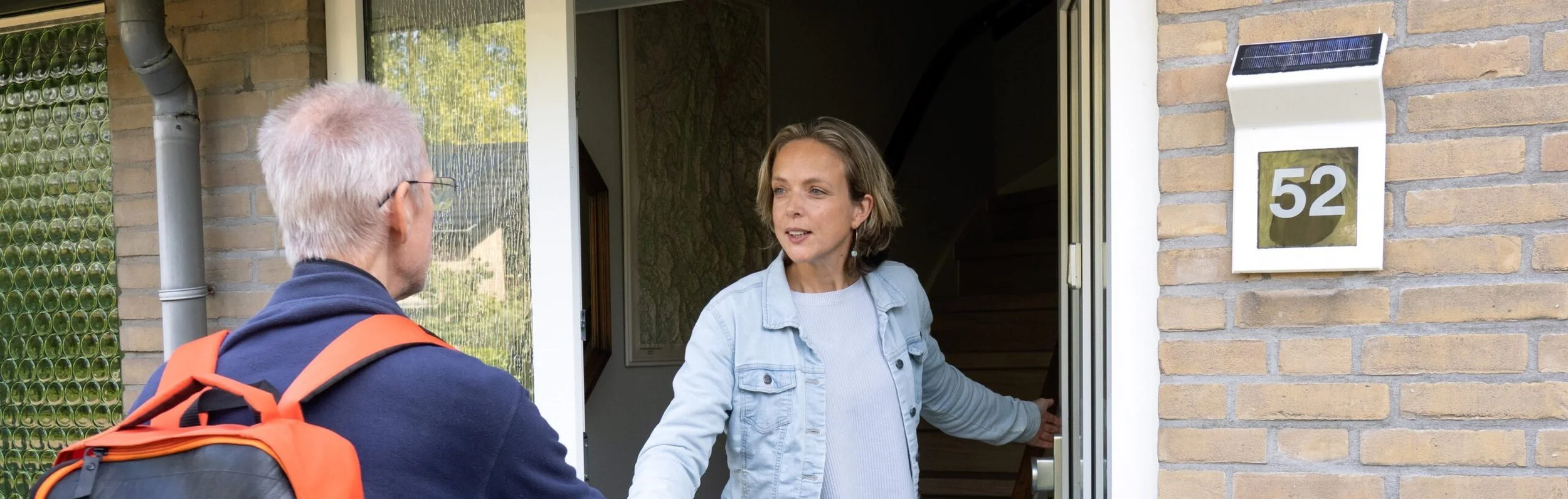
More and more households are struggling to pay their energy bills and could use some help reducing their energy consumption. The Haarlemmermeer Energy Bank deploys energy coaches and fixers to help households on a minimum income save on their energy costs. They offer tips on changing behavior and implement small energy-saving measures at no cost.
How does a coach like that actually work? To find out, we spent some time with energy coach Paul Sprunken, who has been volunteering at the Energiebank since the start of this year. Before retiring, Paul worked in logistics his entire career, including a ten-year stint with Doctors Without Borders. Helping people is in his blood.
We asked him the following questions:
What attracted you to this job?
In my later years, I’m committed to sharing my experience and putting it to practical use. My motto is, “Sharing is a privilege,” and maybe it will be of some use to someone. I’m doing that now through energy coaching, but I also did it throughout my working life.
I’ve also made my own home completely sustainable: I’ve even stopped using gas. Our home is heated using infrared panels and underfloor heating, with the electricity generated by our 27 solar panels. I also pay close attention to standby power consumption by making sure to turn off appliances properly. And most importantly: if I’m cold, I put on a warm sweater or grab a blanket before turning up the heat. Once you start doing that, you’ve already taken the first step.
What exactly does your job entail?
First and foremost, I believe that a coach—if the client is open to it—should primarily help raise awareness about energy consumption. And they should clearly explain the consequences of making certain choices. I don’t judge those choices, but if you’re better informed, that will hopefully have an impact in the long run. In addition, I offer practical tips that can help reduce energy consumption, such as applying radiator foil, installing draft stoppers, or replacing light bulbs with LEDs.
How often do you visit someone each week?
That depends partly on the number of applications, and sometimes it’s difficult to schedule an appointment. We expect those applications to start increasing now. Then we’ll go from 1–2 per month to perhaps 1–2 per week. I would welcome that.
Does that apply only to renters, or also to homeowners?
We receive many inquiries from renters. Renters are very limited in what they can do to their homes because they aren’t the owners and therefore can’t or won’t make major investments. Renters don’t tackle the key energy envelope—which includes the exterior walls, roof, and floor. As unfortunate as that is, the conversation quickly turns to what you, as an energy consumer, can still do.
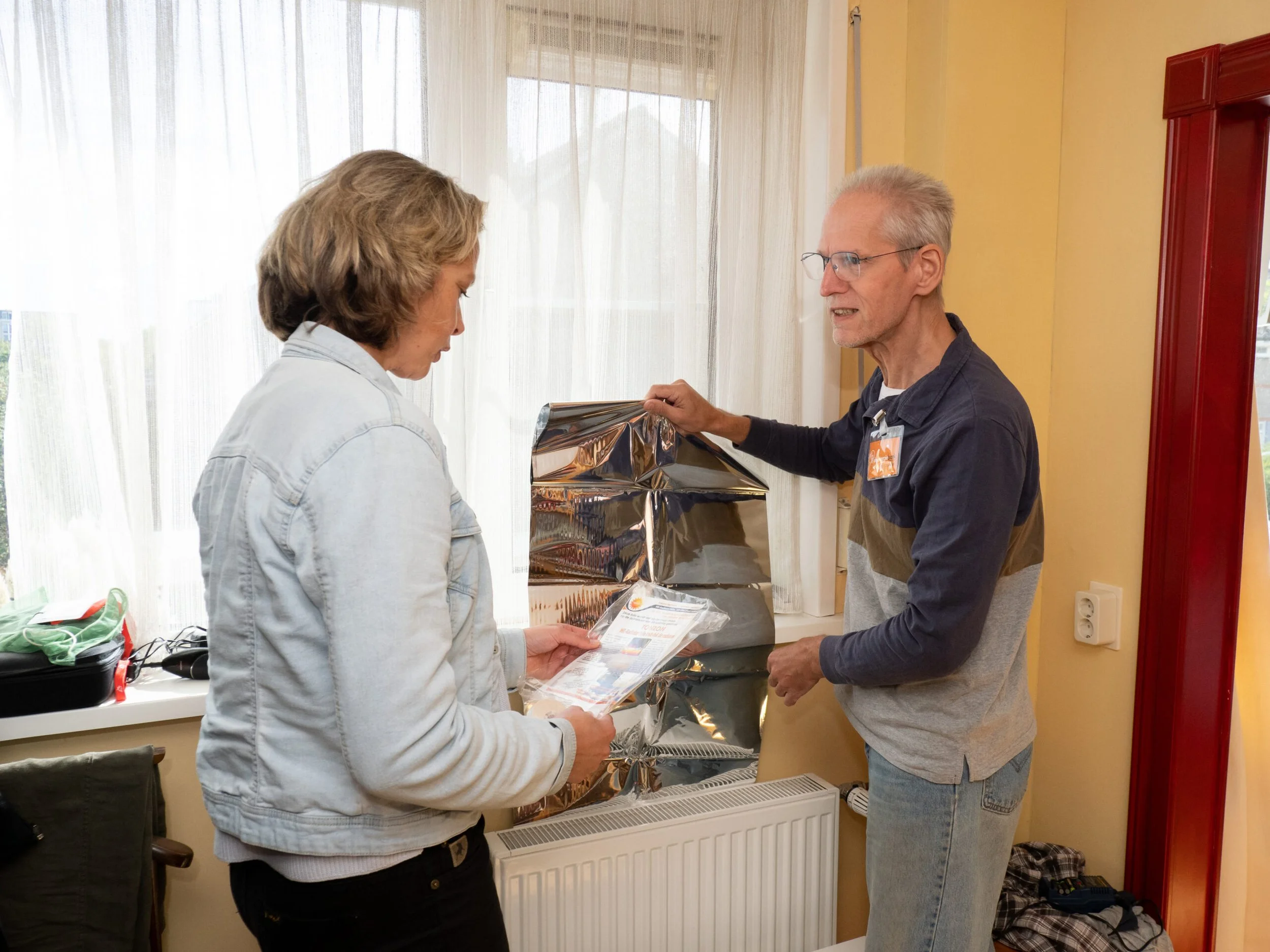
Photo: Energy coach Paul Sprunken shows off radiator foil.
What do you like most about your job?
Of course, the best part is when a client shows that they found the visit helpful. It’s possible that not all problems can be solved, but you do help someone take a step forward. And by giving someone more information, you help them regain a sense of control, and that’s important.
Is there a specific experience that has stuck with you? That experience happened years ago. When I installed a set of solar panels eight years ago—the first one in this neighborhood—people would come up to me and say, “Well, that’s going to save you a lot of energy.” And I would always answer with a resounding “no.” Everyone was surprised. Then I’d explain that we’d been working on our energy habits at home for quite some time—no unnecessary lighting, more energy-efficient appliances, and so on. So we’d already achieved those savings. The panels could only generate energy to cover the remaining consumption; they don’t actually save energy.

Replacing incandescent light bulbs with LED lighting.
Would you encourage others to become energy coaches? And what would you say to them?
Everyone has their own motivation, and that can vary. If it’s a good fit for you, the opportunity comes your way, and you enjoy helping people, then the Energiebank is definitely a great initiative that meets a real need. You work independently (after completing training) and can rely on the coordinator, so you know you’re supported. In any case, I really enjoy doing it.
Would you like to become an energy coach? Or a “fixer”?
If so, please contact the Energiebank Haarlemmermeer. You can email us at: welkom@energiebankhaarlemmermeer.nl or call: 023 20 40 187.
For more information about the work of an energy coach or fixer, click here.