
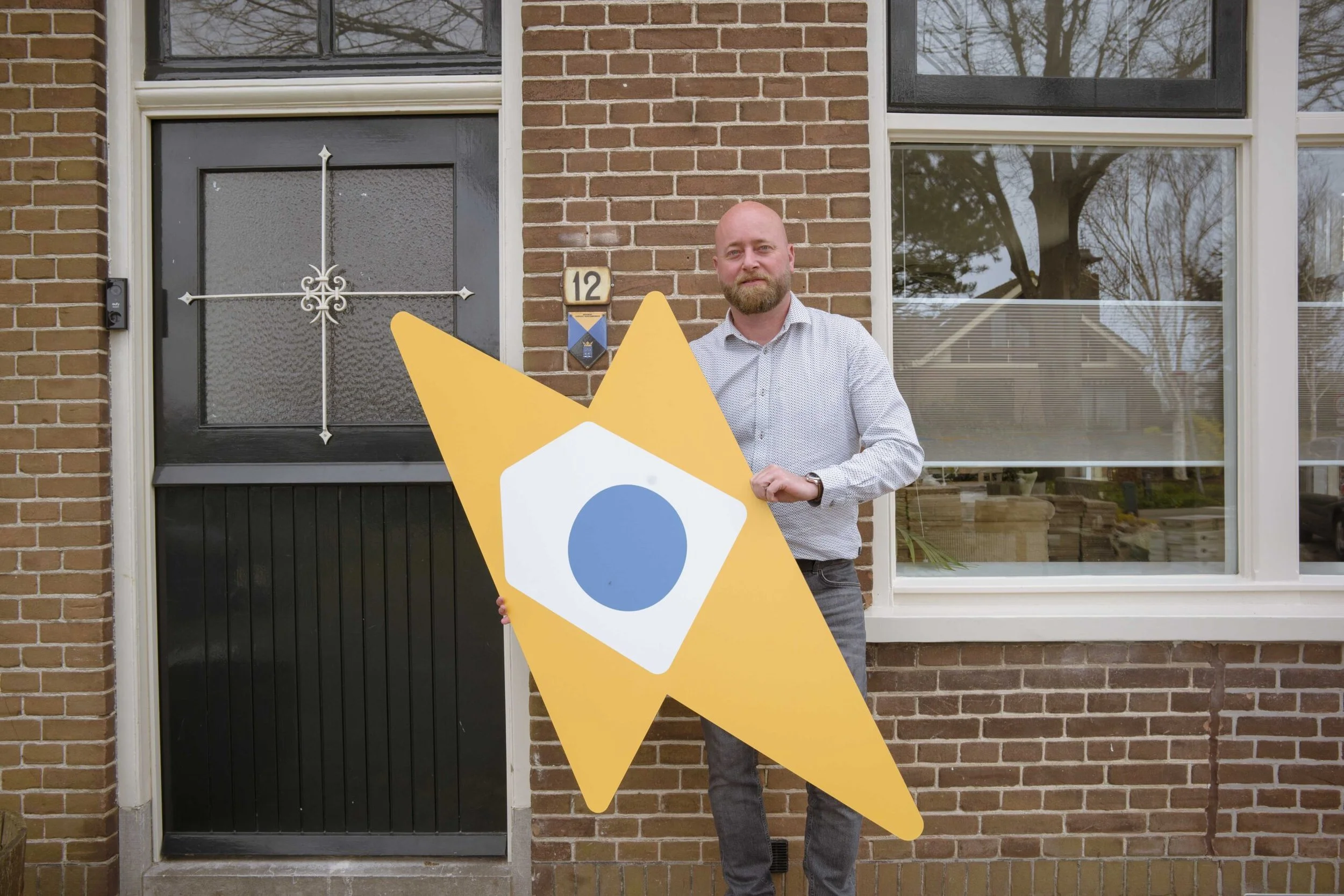
Sander Vermeer, who lives in a 19th-century house built in 1870 in Buitenkaag, proves that it is indeed possible to make a 19th-century home more sustainable. In late 2020, he and his family—including their two children—moved into the historic home on Lisserdijk and decided to give the house a major overhaul.
The house had always been rented out and was quite outdated. In addition, the layout was illogical. This prompted the family to hire an architect and undertake a thorough renovation of the property. An addition was built, featuring eight solar panels and HR++ glass. The main house was insulated by installing PIR panels on the exterior walls, which were then finished with stucco.
Comfort & Recovery
The family had underfloor heating installed on the ground floor, which allows the home to be heated at a low temperature—and thus in an energy-efficient manner. The house is already being heated with the boiler set to a temperature of 50 degrees. In addition, balanced ventilation with heat recovery has been installed in the high ceiling.
With two teenagers who shower frequently, the family benefits from their shower heat recovery system, which uses the hot, outgoing shower water to heat the incoming cold water. The bedrooms on the first floor each have an air-conditioning and heating system and can be heated and cooled separately and efficiently. Sander: “Even though we’ve only just moved in, I’m convinced that these upgrades make a big difference in comfort. The insulation and the low-temperature heating, in particular, feel very pleasant. In the summer, it’s great that we can cool the bedrooms.”

Moving Away from Natural Gas
The family already has new plans in store to reduce their gas consumption. For example, a heat pump water heater with additional solar panels is on their wish list. They can also achieve further savings by insulating their historic front door. Sander: “I can now fairly easily upgrade to a fully electric solution. The house is simply ready for it, and there’s plenty of space.”
Sander looks back positively on his visit from the Energy Help Desk: “Even though I had already gathered a lot of information on my own, it was very helpful to have the Energy Help Desk come by. After the renovation, they also used a thermal scan to identify where heat was escaping from the house. After that, I installed a draft stopper under the door and replaced the window seals. I received a clear report from the visits in the mail—that was really nice.”